

Understanding Closing Costs in California: A Simple Guide for Buyers and Sellers
Buying or selling a home involves more than just agreeing on a purchase price. There are several services required to safely transfer ownership of a property, including escrow services, title insurance, recording fees, and taxes.
These expenses are commonly referred to as closing costs. In California, certain costs are typically paid by the buyer and others by the seller, although everything can be negotiated as part of the purchase agreement.
This guide explains the most common closing costs and how they are typically divided between buyers and sellers.
What Are Closing Costs?
Closing costs are the fees associated with completing a real estate transaction. These costs cover services such as:
Escrow administration
Title insurance
Recording documents with the county
Transfer taxes
Loan-related fees
Both buyers and sellers usually have closing costs, but the types of expenses differ depending on each party’s role in the transaction.
Common Closing Costs for Sellers
Sellers typically pay the costs associated with transferring ownership of the property.
Typical seller closing costs may include:
Real estate commissions
Owner’s title insurance policy
County transfer taxes
Escrow fees (often split with the buyer)
Mortgage payoff balance
HOA document or transfer fees
Disclosure reports such as Natural Hazard Reports
Property tax prorations
Example Seller Closing Costs
Example based on a $1,000,000 home sale:
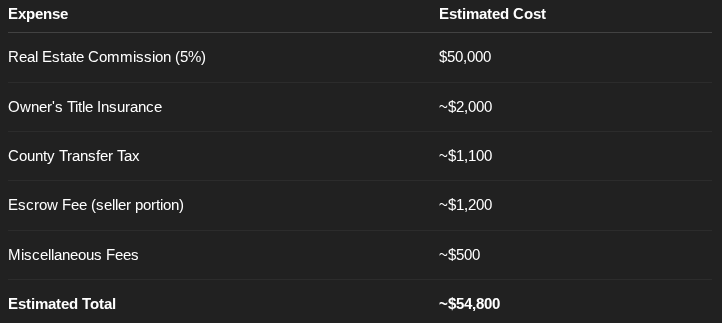
Actual costs vary depending on the property, escrow company, and negotiated terms of the contract.
Common Closing Costs for Buyers
Buyers typically pay the costs associated with obtaining financing and setting up the new mortgage.
Typical buyer closing costs may include:
Loan origination fees
Lender underwriting fees
Appraisal
Credit report
Lender’s title insurance policy
Escrow fees (often split with seller)
Recording fees for the new loan
Home inspections
Homeowners insurance
Prepaid property taxes and interest
Example Buyer Closing Costs
Example based on a financed purchase:
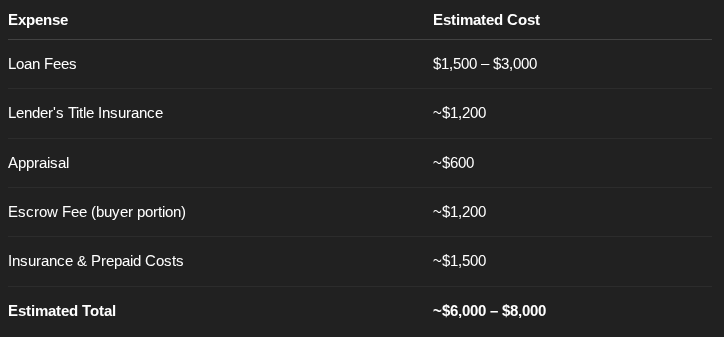
These estimates vary depending on the purchase price, loan program, and lender requirements.
What Does Escrow Do?
Escrow is a neutral third party that manages the transaction and ensures that all conditions of the purchase agreement are met before the sale closes.
The escrow company typically:
Holds the buyer’s deposit
Coordinates documents between parties
Pays off existing mortgages
Collects and distributes funds
Records the new deed with the county
Escrow protects both the buyer and seller by ensuring that no funds or property transfer until all terms are satisfied.
What Is Title Insurance?
Title insurance protects homeowners and lenders from potential legal claims against the property related to past ownership.
Examples of issues title insurance may protect against include:
Unpaid liens
Errors in public records
Unknown heirs claiming ownership
Forgery or fraud in past documents
There are two common types of policies:
Owner’s Policy
Protects the buyer’s ownership rights.
Lender’s Policy
Protects the mortgage lender’s financial interest in the property.
Are Closing Costs Negotiable?
Yes. While there are customary practices in California, closing costs are ultimately determined by the purchase agreement negotiated between the buyer and seller.
For example, a seller may agree to credit the buyer for some closing costs to help complete the transaction.
Your real estate professional and escrow officer will provide a final settlement statement before closing that clearly outlines all costs involved.
Final Thoughts
Understanding closing costs early in the home buying or selling process helps prevent surprises at closing. While every transaction is unique, knowing what costs are typical can make the process much smoother.
If you have questions about closing costs, financing options, or the escrow process, feel free to reach out anytime.